martes, 23 de diciembre de 2008

Baseball


We went to a baseball game last week. They love baseball here. We went to a game in a city called San Francisco de Macoris, whose baseball team is called, get this, The Giants (Gigantes). They were playing one of the two teams from the capital called Leones de Escogido (Lions of the chosen one. I don't get it either). The other teams are the Aguilas/Eagles, of Santiago (my team), the Toros/Bulls (formerly known as the Azucareros, or Sugar farmers. Good name change) of La Romana, the other capital team called Tigres/Tigers de Licey (the city where the team used to be), and the Estrellas/Stars of San Pedro de Macoris.
Baseball here is great. The games are insane. After the Aguilas won last year, the street party in Samana, the city I was in at the time, was the biggest I have ever seen. People say that baseball is the DR's actual religion. I beg to differ, but I would say it is pretty close.

Feliz Navidad

Merry Christmas! What? It’s not Christmas today, you say? Well, it is here. Sort of. This is an unofficial tally, but I have gathered that Christmas runs from about December 1 to January 15, slightly more than the twelve days that we pretend that Christmas lasts in America (turtle doves?). These data figures come from indirect and direct observation, such as when my neighbor and the Brugal commercial tell me that “ya llegó la navidad.” Also, it has been raining here nonstop for over month, meaning that it is winter and thus Christmas. Rain, like magic, removes the average person from even remote responsibility for anything. Don’t leave your house: you might get wet. Given that the mode of transportation here is the motorcycle, this is likely. Still, a lost two months of productivity may make the economic situation here slightly more understandable. At least now it isn’t 100 degrees at noon and I only have to go to the buckets under the gutter to collect water, not to the river.

Back to Christmas. Sure, we all know that Christmas is December 25. They don’t even do that here. In the DR, the most important day is the 24th, which they call “noche buena,” or, good night. (To actually say “good night,” like to your roommate when you are going to bed, is “buenas noches.” Here, it is also used as a greeting when it is dark, like “good evening.”) The Good Night begins especially early, something around 9AM. By then, the pig is well on its way to being sufficienltly slaughtered and roasted on an open fire (something like chestnuts, but more hairy and with someone higher protein content). This means that it is time to drink, like most Dominican holidays (recall Corpus Christi day, Election Day, Patron Saint’s Day, etc.)

Why, then, does Christmas start the first of December? From the middle of November, I noticed a serious slowdown of work. By the beginning of this month, no one was showing up to meetings. Sure, some people still went to the pueblo to their jobs, but for those whose employment or other duties generally stay in the campo, its been over for awhile. It isn’t like anyone set a rule, or explicitly states that the meetings are cancelled, just no one shows. I noticed a general up tick in early and often attendance at the colmado for drinking/domino sessions.

Interestingly, most Dominicans receive “doble sueldo,” or double the salary, for December. This is akin to the holiday bonus, but is the rule rather than the exception. It has no basis in merit or accomplishments, it is just twice as much as is normally received. This means you can afford that pig to roast and the nifty bottle of white rum that fits in your pocket. Mmm. Warm.

Of course, New Years’ takes up a couple weeks, and then on January 6 falls Three Kings’ Day (look at all these fun things I learn about Catholicism being here), which is the day when presents are traditionally given, as opposed to Christmas itself. Then, at least another week or two is needed for some well-deserved recuperation after all those festivities. Soon enough, it is February, it has stopped raining, it is hot again, and Lent is upon us. The world begins to spin again.

sábado, 20 de diciembre de 2008


Don't Worry, I Play a Doctor in the OR

In early November, I participated in one of the most highly coveted Peace Corps activities: the Medical Mission. Like Peace Corps gold. It works like this: a group of doctors, nurses and staff from an area (say, Kansas City) hospital or university come to perform a series of medical services here in the DR. A select group of Volunteers, then, are chosen to help the medical team in translation and other things. Since most of these services are performed on the poor, we are especially valuable since we live in those marginalized communities targeted by the missions, meaning that we better understand the rural accent and culture than someone who may have studied Spanish in say, Spain.

Why are med missions so great? We Volunteers get to travel to a nice medical center for a week (read: AC and decent food), have everything paid for, and even get taken out by the generous doctors if they are feeling kind. Plus, we are working. A win-win for sure.

The Med Mission I participated in was very specific – hernia surgeries. For a week, these doctors and nurses, with the invaluable help of the PCV, performed eight to ten hernia operations a day in each of the three operating rooms. It was fascinating. For anyone who has not been in an operating room, do it. Its cool. Scrubs are really comfortable, and all of that shiny medical equipment I’m not allowed to touch for fear I was going to contaminate them was mesmerizing.

Well, maybe I thought I was going to lose my boiled plantain breakfast the first day. After that, I got over the spurting blood (OK so that only happened once), the smell of burning skin (some sort of hot knife for cutting), and massive, and often open, testicles. Remember, hernias? These things range from kind of to fairly to very nasty, and our rural farmer friends lack basic medical care, so they go untreated for, well, a while. The center here in the DR has volunteers who go out into the rural areas to look for prospective patients, and then bring them in for operations. Needless to say, I got the opportunity to witness some things not often seen by anyone in the states.

Our everyday work here can be daunting and maddeningly slow. Seeing actual results is rare and fleeting. Sometimes it feels like I’ve been locked in a padded cell with no padding. Participating in the med mission is refreshing. We are able to see how our presence is appreciated. We are also able to fulfill one of Peace Corps 3 main goals: to bring home what it is that we do here as PCVs. The medical staff that gives up their vacation time and a week of pay gets to see the life of a PCV, and bring home stories of the crazy Volunteers that they have met. It is also an important reminder for us what it is that is going on at home – the economic crisis, the election (Republicans can be good people, too!), and the daily adventure of a suburban parent. Some of these things are as foreign to us as the rural villages in which we live to the doctors and nurses. Así es.

I’ve tried to post a few pictures here. Enjoy.

sábado, 22 de noviembre de 2008


This time four years ago, I was on the front lines of the presidential election. For the months leading up to the elction, I was working with various organizations on registration and GOTV efforts – phone-banking, canvassing, whatever. Election night, I was in a hotel ballroom in Orlando, watching the returns come in, with hundreds of other election volunteers. By the time we had to board our plane back to Washington, DC at 2AM, we knew it was over. Our hard work, our valiant efforts, just weren’t enough. We went back to our normal lives as students, chafing under an administration that we were unable to change.

This time around, it was a little different. Four years later, I am in a different place. No longer a student, probably less idealistic, and certainly in no position to do any campaigning, I watched from afar as well as I could. I asked for email updates from friends and I checked the news whenever I was able to use the Internet.

Watching CNN from afar is fascinating. I happened to be at the Peace Corps office (where there is cable) when Sarah Palin was introduced to the world. The other Volunteers and I were intrigued. Who was this mysterious, folksy woman from Alaska? The only thing CNN seemed to be concerned with was that she has a pregnant teenage daughter. All news, all the time. Anyway, I was back at the office a week later and they were still talking about her. By then, I had found out a little about her. Could Americans be that dim? Thankfully, it looks like they came around.

What I found most interesting is that Dominicans have taken an interest in the election, even in my isolated village. I have not met one Republican Dominican. Every single one would vote for Obama if they had the chance. Maybe its because although they won’t admit it, they all secretly know that they’re actually black, and this is their outlet in acknowledging this fact. Or perhaps they are genuinely concerned for the state of the world (I am often told that the money spent on the Iraq war could be better spent otherwise, like helping the poor. I couldn’t have said it better). Dominicans would not caught dead calling themselves black (on the national identity card, there is a space for skin color. Every single one I have seen says “indio,” which in Dominican parlance, covers many shades of brown), so here was their chance. They readily called Obama black, or even “prieto” (really black), but with a tone of respect.

For election night this year, a few of us got together at a hostel with cable in a nearby city. We watched CNN, as I did four years ago, anxious but hopeful. This time, the room didn’t fall silent but erupted in cheers, and the only tears to be found were those of joy. All of the local news programs the next morning devoted thorough coverage to the election of the new presidente Americano negro.

Just as good was when I returned home. I have received congratulations from at least ten different families. When I walked into my host family’s house, my host mom’s face erupted into a huge smile and she hugged me, telling me that she and her family were so happy and very proud, and looking for a better next four years. The interest and reaction of my neighbors made not being in the States at least a little bit better. I, too, am happy and proud once again at what my country can produce.

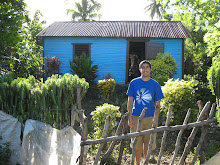
The picture should be of my youth winning the business plan competition I wrote about awhile back, he is the one in the middle holding the small certificate.

Un Ano


aA year in the Peace Corps. One year ago, I arrived at my site for my first visit, although I did not swear in as a Volunteer until the next week. We say that the year has passed quickly, or at least it feels like it. But the things I have seen and accomplished in the past year are many, so I argue that this year was, in fact, very long. I hope that the next year is even longer, as I have even more to see, accomplish, and then conclude before I leave here in November, 2009.

It being around Thanksgiving time, let me step back and give thanks for some of what I have here. When I was home in August, it was nice not sweating waking up or having to battle tarantulas, but there was also something missing. I couldn’t go next door, be offered fresh papaya juice and play dominos or talk about life. Children didn’t wander barefoot into my house and they didn’t scream my name when I walked past. Although my mother might tell me differently, I’m just not as special in America as I am here. My neighbors truly care for me and for my work (most, anyway). They see me as an asset, and they are happy that I live and work with them. We enjoy the most basic aspects of life together – a brilliant moon, a smiling child, freshly cut sugarcane. Sure, they complain, and often with good right, as plenty is lacking here. They, however, also know how to value what they have, which I find inspiring. I have certainly learned just as much from them, if not more, as they have from me.

Another reason I am glad I am here is not having to worry about all this financial mess going on back home. Since I have a net worth of almost nothing, it hasn’t really affected me that much. This net worth isn’t growing very quickly with the money I receive here, although I just got a raise – I now earn five figures (in pesos). Of course, inflation here has recently gone up, so this new money is disappearing fast. At home in my campo (village), I spend almost nothing – rent is $12 (yes, dollars) and I pay my former host mom $30 a month to feed me lunch. Dinner last night was a 45-cent avocado with two pieces of ten cent bread. My neighbor makes ice cream in little plastic bags for eight cents, so I had a couple of those, too. The electricity here is unreliable at best, so the end product tends to resemble half-frozen sugared juice. Nevertheless, still delicious.

So, a year to go in the Peace Corps. Wish me luck. Sending me things would be nice, too.

martes, 23 de septiembre de 2008

It's Raining.

Whoa, hurricanes. Americans don’t think too much about hurricanes, unless we life around the Gulf of Mexico. For the rest of us, it is a bunch of funny sounding named (Olga? Wilma?) swirling colors far out in the ocean. Last year, the DR got pounded first by Noel in October, when it rained for seven straight days, and then by Olga in December, when a dam broke, resulting in numerous deaths and extensive property damage. Recently, we have taken hits from four storms in a row: Fay, Gustav, Hannah, and Ike. We were pretty lucky here, though our neighbors Haiti, Cuba, and the Bahamas didn’t catch a break.
Anyway, back to me. Back in August, when I was in the States, Fay moved past the DR. Then, the morning I got here, Peace Corps notified us about Gustav. We were put under “standfast,” which means that we are not allowed to leave whatever our current location is. The storm moved to our south, and did some pretty significant damage down there. Since I live up in the north, all we received was a little rain.
The next weekend, I went to Celebrando el Cibao, which I wrote about earlier, and then went to the capital on Monday for a meeting. As I was about to leave on Wednesday, we were informed that Hannah was coming, and so we were put under “standfast” again. Standfast in the capital isn’t that bad – we receive per diem, and get luxuries like the internet and AC that don’t happen too often (ie ever) where we live. Hannah was a little difficult – for a few days, instead of moving west it turned south and almost hit Haiti, before moving back north and west again. During Hannah, we watched Ike form – a massive Category 4 storm churning out in the Atlantic. Peace Corps was in crisis mode. At the end of Hannah, we were allowed to leave the capital, but the next day for Ike the Volunteers in my region were “consolidated.” This means that we all get together at a central, secure location. This location turned out to be a really nice hotel with a pool, tennis and basketball courts, a casino, great food, and most importantly, really sturdy walls. We were left there for four days. Things like these pose problems for us. We all have our work at home – youth meetings, building projects, English classes – that we obviously can’t attend to while we are at the hotel. We worry about our communities, and have trouble getting in touch. Sure, consolidation is great, but we have our lives we have to take care of outside of fun hotel jaunts. Our neighbors cannot figure out why we leave. If our neighbors stay, why don’t we? This is the hardest question to answer. We have to, we say. But we also are Americans, cared for by our government, and we can afford it. That’s just not they way it is for our neighbors.

When I got back, my neighbor had made a dessert called “toto de monja.” Ten points for someone who knows what this means, and then they get some.